Acacia Confusa and Acacia Acuminata are two distinct species in the legume family, Fabaceae. Although they share the Acacia name, they differ in their natural distribution, growing environments, and physical characteristics. Understanding these differences helps readers learn more about each species and identify reliable botanical information.
Acacia Confusa is native to Taiwan and parts of Southeast Asia, including areas of the Philippines, while Acacia Acuminata originates from southwestern Western Australia. Both species can grow as shrubs or trees, but their natural habitats and identifying features set them apart.
In this guide, we will compare Acacia Confusa vs. Acacia Acuminata, explore their botanical characteristics, explain the importance of accurate species identification, and discuss the differences between common botanical product formats.
The Short Answer: What Is the Difference?
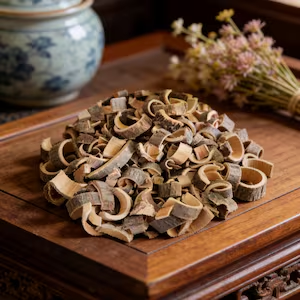
The main difference between Acacia Confusa and Acacia Acuminata is their geographic origin and botanical appearance. Although both belong to the legume family, Fabaceae, they are separate species with distinct natural distributions and identifying characteristics.
Acacia Confusa grows naturally in parts of Taiwan and Southeast Asia. It is an evergreen shrub or tree with flattened, leathery foliage known as phyllodes. Its flowers typically appear in small, rounded clusters.
Acacia Acuminata, commonly known as Raspberry Jam Wattle, is native to southwestern Western Australia. It also produces flattened phyllodes, but these are generally narrow and elongated. Its golden-yellow flowers grow in cylindrical spikes rather than the rounded flower heads characteristic of Acacia Confusa.
The table below highlights the key differences between these two Acacia species.
| Feature | Acacia Confusa | Acacia Acuminata |
|---|---|---|
| Scientific name | Acacia confusa | Acacia acuminata |
| Plant family | Fabaceae | Fabaceae |
| Native origin | Taiwan and parts of Southeast Asia | Southwestern Western Australia |
| Growth habit | Evergreen shrub or tree | Shrub or tree |
| Foliage | Flattened, leathery phyllodes | Narrow, elongated phyllodes |
| Flower arrangement | Small, rounded flower clusters | Cylindrical flower spikes |
| Flower colour | Yellow | Golden yellow |
| Common name | Common names vary by region | Raspberry Jam Wattle |
| Natural environment | Primarily tropical environments | Includes subtropical and semi-arid environments |
Natural Habitat in Western Australia
Acacia Acuminata occurs naturally across parts of southwestern Western Australia. It can grow in several types of landscapes, including woodland and shrubland environments.
The species is associated with a range of soils and is found in areas that include semi-arid environments. These conditions differ from the predominantly wet tropical environments associated with the native distribution of Acacia Confusa.
Understanding this geographic difference is useful when comparing the two plants. Although both belong to the Acacia genus, their natural ranges developed in different parts of the world.
The species has also been cultivated beyond its native range. For this reason, location alone is not always enough to identify a particular plant.
Leaves, Flowers, and Other Characteristics
Acacia Acuminata has narrow, elongated phyllodes that are often straight or slightly curved. Their shape and arrangement can help distinguish the species from other wattles.
Its flowers are golden yellow and grow in cylindrical spikes. This flower arrangement is one of the clearest general differences between Acacia Acuminata and Acacia Confusa, whose flowers usually appear in rounded clusters.
Acacia Acuminata also produces elongated seed pods after flowering. The combination of phyllode shape, flower arrangement, seed pods, and geographic origin helps botanists identify the species.
As with Acacia Confusa, plant appearance can vary. A reliable identification should consider several characteristics and, where necessary, use specialist botanical resources.
These differences provide a helpful starting point for understanding each species. However, the table describes general botanical characteristics rather than a complete identification key.
For authoritative information, consult Kew Science’s Plants of the World Online entries for Acacia Confusa and Acacia Acuminata.
Understanding Botanical Names and Product Descriptions
Botanical names help distinguish plants that may share similar common names or physical characteristics. For example, the name Acacia confusa identifies a particular species, while Acacia acuminata identifies another.
When reading botanical product descriptions, pay attention to the stated species, geographic origin, plant part, product form, and package weight. These details help readers understand exactly what a listing describes.
Whole, Shredded, and Powdered Forms
Botanical materials may be supplied in different physical forms, depending on the product and supplier.
Whole form: Larger pieces that retain more of their original physical structure.
Shredded form: Smaller, cut pieces with a more uniform size than larger whole pieces.
Powdered form: Finely ground material with a much smaller particle size.
These terms describe physical form, not botanical identity. A powdered product cannot automatically be identified by its appearance alone, and the form does not establish the species, geographic origin, purity, or chemical composition.
Clear labeling and accurate product information are therefore important when comparing botanical materials.
Storage and General Product Care
Appropriate storage helps protect botanical materials from environmental conditions that may affect their quality.
Keep products in suitable, securely closed packaging and follow any storage instructions provided by the supplier. A cool, dry location away from direct sunlight and excessive moisture is generally preferable for dry botanical materials.
Check packaging periodically for damage or signs of moisture. If a product develops visible mould, an unusual odour, or other signs of deterioration, do not use it.
It is also important to keep botanical products clearly labelled and safely stored away from children and pets. Always follow relevant product-specific guidance and local regulations.
Frequently Asked Questions
Are Acacia Confusa and Acacia Acuminata the same species?
No. They are separate species within the genus Acacia. They differ in their natural geographic distributions, foliage characteristics, and flower arrangements.
Where does Acacia Confusa naturally grow?
Acacia Confusa is native to Taiwan and parts of Southeast Asia, including areas of the Philippines, Borneo, Malaya, and Sumatra.
How can you distinguish the two species?
Their flower arrangements offer a useful general distinction. Acacia Confusa typically has rounded flower heads, while Acacia Acuminata produces cylindrical flower spikes. Their foliage and natural distributions also differ.
However, these features should be considered together rather than used individually to confirm a plant’s identity.
Are whole, shredded, and powdered botanical materials different species?
No. These terms describe the physical form of the material, not the species itself. The botanical name and product labeling are needed to establish which plant a product is intended to represent.
Why is accurate botanical labeling important?
Accurate labeling helps distinguish similar species, communicate the stated origin of a product, and provide clearer information about its physical form. It also helps customers understand what a product description does and does not establish.
Conclusion: Understanding the Differences Between Acacia Species
Acacia Confusa and Acacia Acuminata share a genus, but their natural origins and botanical characteristics make them distinct species. Acacia Confusa originates from Taiwan and parts of Southeast Asia, while Acacia Acuminata is native to southwestern Western Australia.
Their foliage and flower arrangements offer useful clues for understanding the differences. Nevertheless, accurate identification requires more than a quick visual comparison.
At AcaciaRootBark.store, our botanical guides aim to help readers understand plant names, product descriptions, and the differences between botanical materials. Explore our Acacia and Mimosa educational resources for more information about species, product forms, origins, and general product care.
For additional botanical reading, consult established references such as Kew Science’s Plants of the World Online and specialist Australian flora resources.